
Understanding EKGs & Heart Health

What is an EKG (electrocardiogram)?
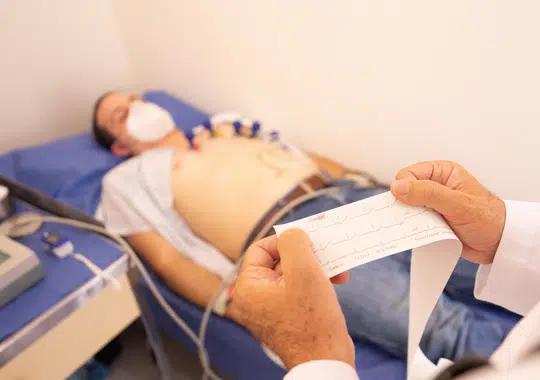
EKG is a quick painless test that measures the electrical activity that makes your heart beat. This test measures if electrical signals are having a difficult time conducting (moving) through the heart and captures six seconds of heart activity. To conduct this test, a technician places 10 stickers and wires, known as leads, on specific locations of the chest, arms, and legs. The leads help to measure the electricity in the heart by measuring the multiple directions the electricity is moving.
The test can look at the top, front, sides, and bottom of the heart and can show how fast or slow your heart is beating. It also indicates if you have an irregular or regular heart rhythm. While it can’t look at your heart valves, it does give your provider helpful clues about your heart’s overall structure and function.
Why would I be getting an EKG?
Medical providers recommend EKGs for a variety of different reasons. You may already be aware that EKGs are done to look for a heart attack, though it cannot necessarily catch all heart attacks (myocardial infarction i.e. MI). You may also get one for a pre-operative appointment to ensure your heart is looking stable before surgery. Other reasons an EKG may be ordered could be chest pain, shortness of breath, passing out, shoulder pain, dizziness, weakness, fatigue, change in pulse, palpitations, lightheadedness, or jaw or arm pain.
What should I expect during the EKG?
At Lakeview, our EKG room is in a different area than the lab area where you get your blood drawn. One of the lab technicians will take you to the EKG room and ask you to lie on a bed. You may notice a computer like machine in the room, which is what performs the EKG. EKGs are best done if you can lay flat. If you cannot lay flat, please let them know so we are able to help make you as comfortable as possible.
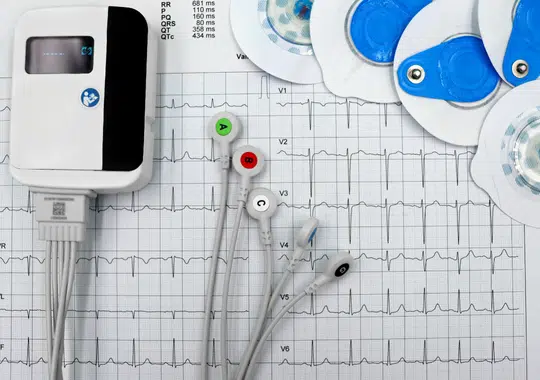
The technician will place10 stickers and then attach wires to them. They may ask you to lie still and stop talking. If there is any sort of movement during the EKG process it can cause the EKG to be difficult to read for the provider as the lines will not be clear. So, the technician may ask you to breathe slowly or hold your breath to try and prevent this.You will then notice that a sheet of paper prints out and that is your EKG.
Are there any risks to the EKG?
For the most part, the EKG is a painless procedure. Some people that may have reactions to adhesive and may get a little rash on the area that the stickers are removed. Unfortunately, as of right now there is no way to do this without the stickers. If you have sensitive skin it may be helpful to inform you provider if they are recommending an EKG test.
Who is reading your EKG?
The EKG technician is not trained to read an EKG. This requires specific training that your provider (MD, DO, PA-C, or NP) has been trained in to do. Often you will get to leave immediately after the test. The technician will bring the EKG to your provider who will reach out to you if there is a concern. On some occasions, patients are asked to stay in the room while technicians confirm the EKG is not concerning or is a good quality. This prevents patients from needing to come back to re-test.
What should I do if my apple watch or smart watch says I am having an irregular heartbeat (ex. Atrial fibrillation)?
If your smart device indicates irregular heartbeat, it is recommended that you be seen by a medical provider. While being proactive is important, we don’t want patients to get overly stressed about these alerts; let us help you navigate this situation if it arises. Sometimes your smart watch is correct, and we do find irregular heartbeats and other times we do not.
At appointments following an alert, you may get an EKG or blood work. You may also get something called a Zio patch ordered which is a patch that you wear on your chest to monitor your heartbeat for upwards of 14 days. Zio patch can often be helpful as the EKG only provides a 6 second view of your hearts electrical activity, while the Zio patch is continuous for many days. This can be helpful to your provider due to recording more information about your heart. Results are read by the Minneapolis Heart Institute and then sent back to your provider.

Natalie Rogotzke, PA-C
Natalie Rogotzke is an Internal Medicine medical provider who joined Lakeview Clinic in 2023. In addition to to having her Physician Assistant degree, she has experience working as both an emergency room EMT and pharmacy technician. Natalie has special interest in preventative medicine, geriatrics, and dementia care.